
Author
Charmin Cho
Data Architect
8 published pieces · Brief, Essay, Deal Note
Bringing data intelligence to APAC's living sector.
Charmin Cho has worked in real estate for 13 years: half of them managing real estate funds, across acquisitions, development and lending in Seoul, and half designing data architecture for REITs and real estate funds. Few practitioners have done both, and his expertise is in joining the two. He holds a master's in Land and Property Development from Texas A&M University and a BA in Housing and Human Environment from Yonsei University.
LinkedIn ↗Written by Charmin Cho
Brief
Korea, Japan, Australia: three numbers to check before investing in living
An investor chooses a market before a property. Three numbers frame that choice: the government bond yield a property must beat, what hedging the currency adds or costs, and whether home prices in the main cities are rising. Korea, Japan and Australia differ on all three.
Macro & policy · 2026.11.23 · 7 min
Brief
Seoul's living stock, mapped: five sectors, entered through a local operator
Remarble Earth tracks 131 operator-run assets and 20 operators in Seoul, across five sectors from the hotel night to the two-year lease. An investor enters through a local operator, and with a trusted one the market's room to grow is within reach.
Operators · 2026.11.04 · 6 min
Essay
Why Seoul, why now
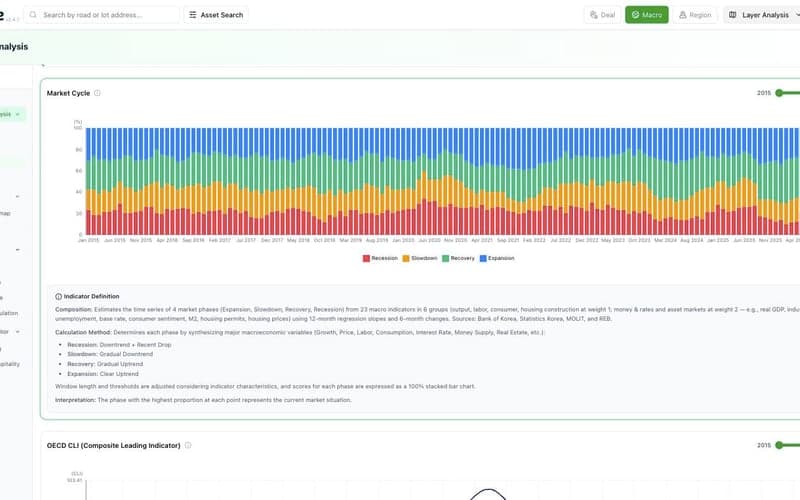
Living is the world's largest investment sector, and global brokers and investment managers already favor it in Asia-Pacific. Seoul has the demand without the supply: households multiply, buying is out of reach, and professional rental stock is scarce. In the third quarter of 2026 the macro went on the record, with the base rate at 3.00%, home prices up 10.6% on a year, record exports and the won at 1,359 per dollar. The record is lengthening, and the repricing it brings is still ahead. That is why Seoul, and why now.
Macro & policy · 2026.10.30 · 12 min
Essay
Where the demand lands
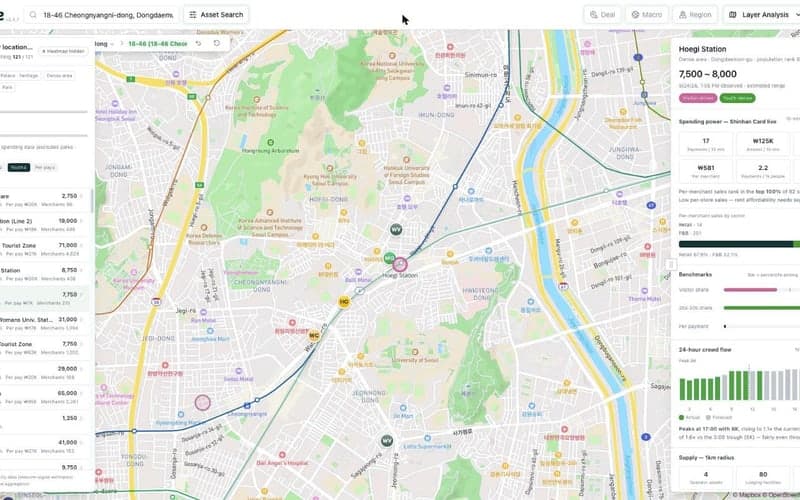
In the third quarter of 2026, Seoul's rent index rose faster every month, to 8.2% in the year to September, the fastest since it began. Behind the rents, households multiply and are priced out of buying, and foreign visitors and international students, both at record highs, add to them. New supply is not coming. The demand does not spread evenly: it follows students, young workers and visitors into a handful of districts, and the quarter's deals closed in the same ones. That is where the demand lands.
Demand · 2026.10.30 · 13 min
Essay
Who runs it, with whose money
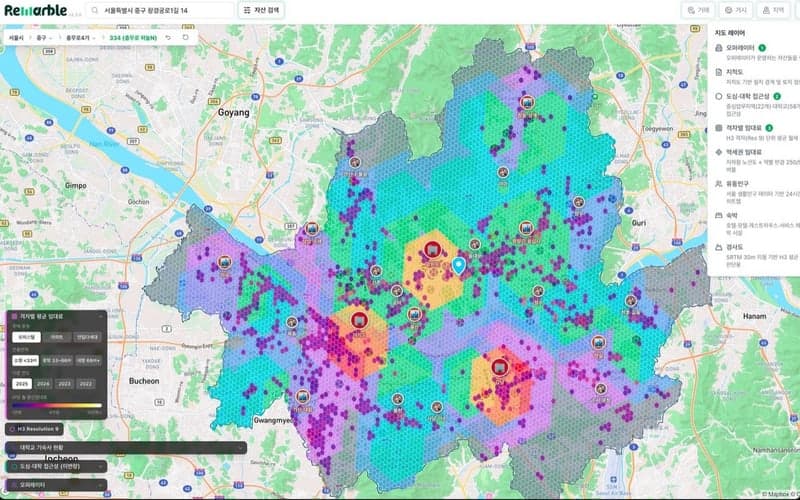
Capital does not buy Seoul's living stock on its own: nearly every institutional deal joins an offshore investor, a Korean asset manager and a local operator, and the operator is the scarce party. Three reached the public record in the third quarter of 2026, each with an operator already running buildings in the city, and none for a building registered as housing; more were announced behind them, and deals that stay private never surface, so the record is a floor, not the market. Investors who come back stay with the operators they know. Four routes in work, each starting from a signal in the data and running through an operator established in its segment. That is who runs it, and with whose money.
Operators · 2026.10.30 · 13 min
Brief
Where Seoul's foreign visitors go — and where the growth is
Seoul's flexible-living rooms sell to foreign visitors. Their demand is concentrated in five districts but grows fastest outside them. Set against the operators already there, the data point to Seongdong-gu, where demand is rising steeply and operators are few. The data say nothing about occupancy.
Demand · 2026.09.29 · 8 min
Deal Note
Aug 2026dealsThree deals, one kind of address
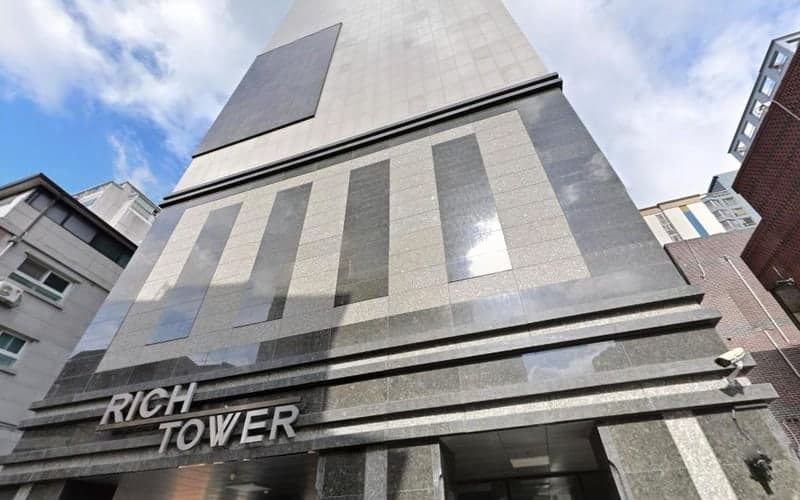
In August, a sovereign fund, a pension plan and a domestic asset manager each moved into Seoul's living sector. Each took a different route, but all three chose a university district. Remarble Earth's data shows what those districts share.
Capital & deals · 2026.09.24 · 6 min
Brief
Priced out of buying: Seoul's rent gap in global context
Seoul has the 4th-highest price-to-income ratio among 12 global cities and the lowest rent-to-income ratio in the set. Buying is out of reach while renting is cheap, which suggests rents have room to rise.
Rents & affordability · 2026.09.11 · 5 min